Introduction
Overview
Welcome to the documentation for eezi.io, our e-Invoicing API. This API allows you to integrate electronic invoicing capabilities into your applications, enabling a seamless exchange of invoices and related information in a standardized format. This documentation provides comprehensive details on how to use the API effectively, including authentication, API resources, request/response formats, error handling, and best practices. Whether you're a developer or a business looking to automate your invoicing processes, this documentation will guide you through the integration process and help you leverage the full potential of our e-Invoicing API.
Introduction
The eezi.io API is designed to simplify and streamline the electronic invoicing process for businesses. It enables the electronic exchange of invoices and associated data using a standardised format for submitting invoices to a country's tax authority. By integrating with our API, you can automate the creation, sending, and processing of electronic invoices, eliminating manual paperwork, reducing errors, and improving efficiency.
This API supports various standardised message types, including invoice creation, invoice status updates, and invoice retrieval. It provides a secure and reliable channel for transmitting invoices and ensures compliance with industry standards and regulations. Our API handles the complex formatting and validation, allowing you to focus on building robust invoicing solutions without worrying about the intricacies of every Tax authority.
Document flows
One integration covers invoices and credit notes, in both directions — sending (AR) and receiving (AP). eezi picks the right flow for each country and mandate; these are the patterns we support.
Sending documents (AR · accounts receivable)
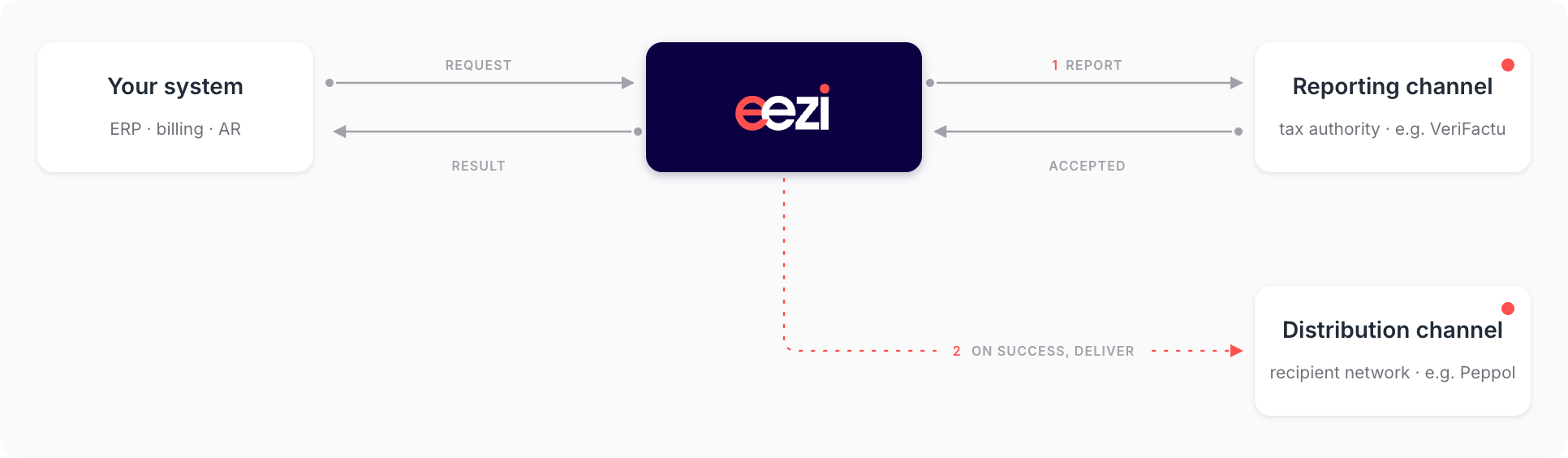
Your system issues invoices and credit notes. eezi validates, converts, and gets them cleared or reported with the right authority or network.
Real-time
One API call — eezi clears the document with the authority and returns the result in the same response.

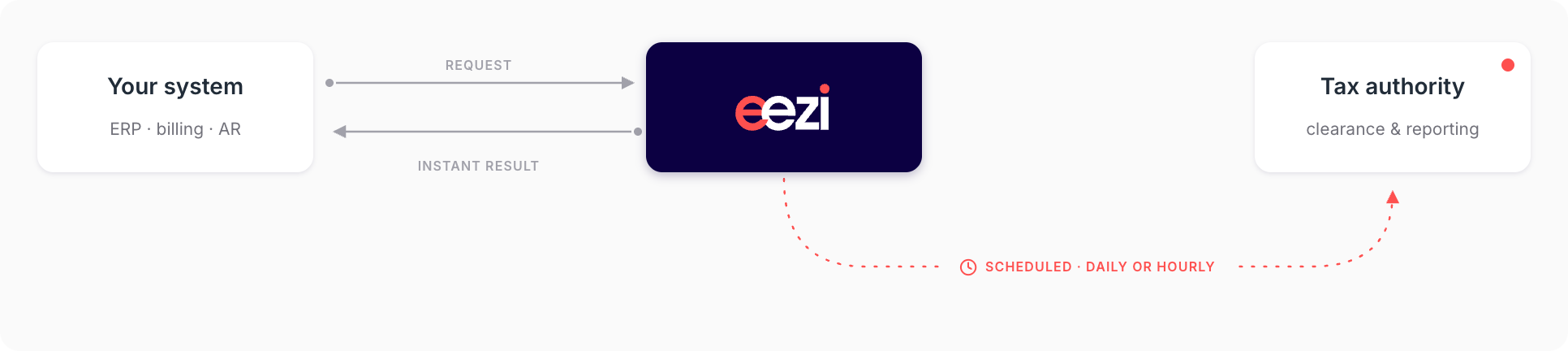
Instant response, scheduled submission
eezi validates and responds instantly; submission to the authority happens on its batch schedule. The instant response is a 202 Accepted with a pending … status — pick up the final status by polling, as described in Asynchronous responses (202).
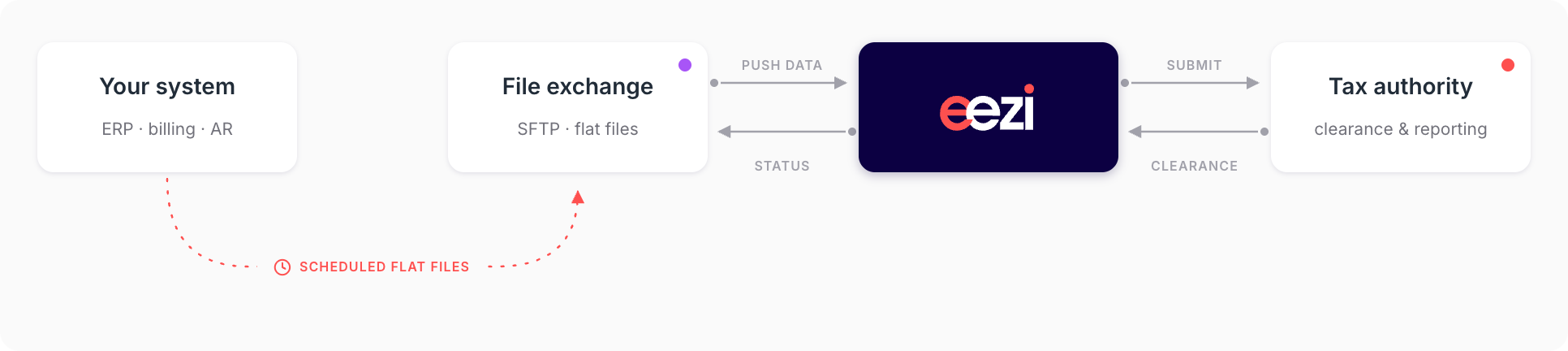
Scheduled files in, real-time submission
You drop flat files on a schedule; eezi picks them up and submits each document to the authority immediately.
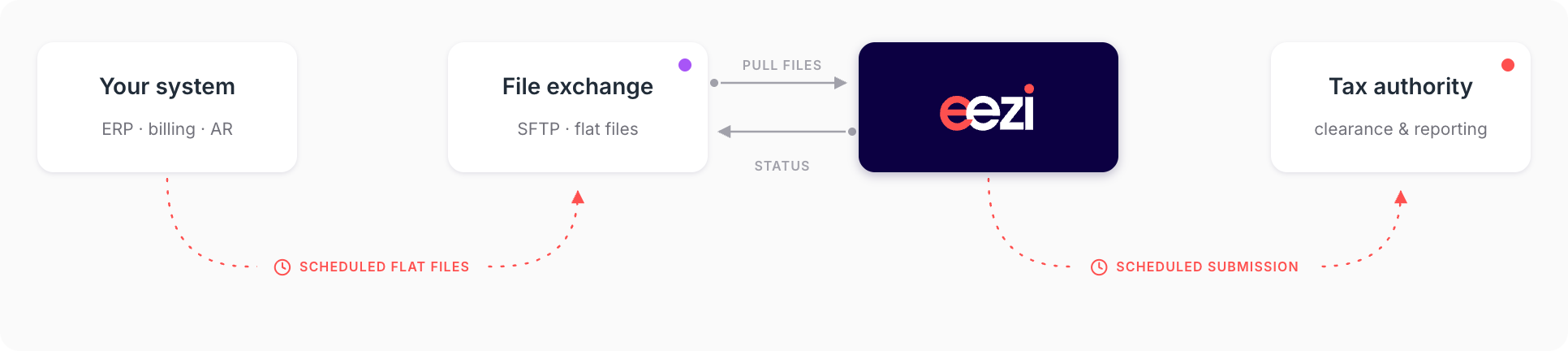
Scheduled files in and out
Fully batched: flat files arrive on a schedule and eezi submits to the authority on its batch schedule.
Multi-channel routing
One call, two channels: eezi reports to the tax authority first, then delivers the document to the recipient's network or emailed on success.
Receiving documents (AP · accounts payable)
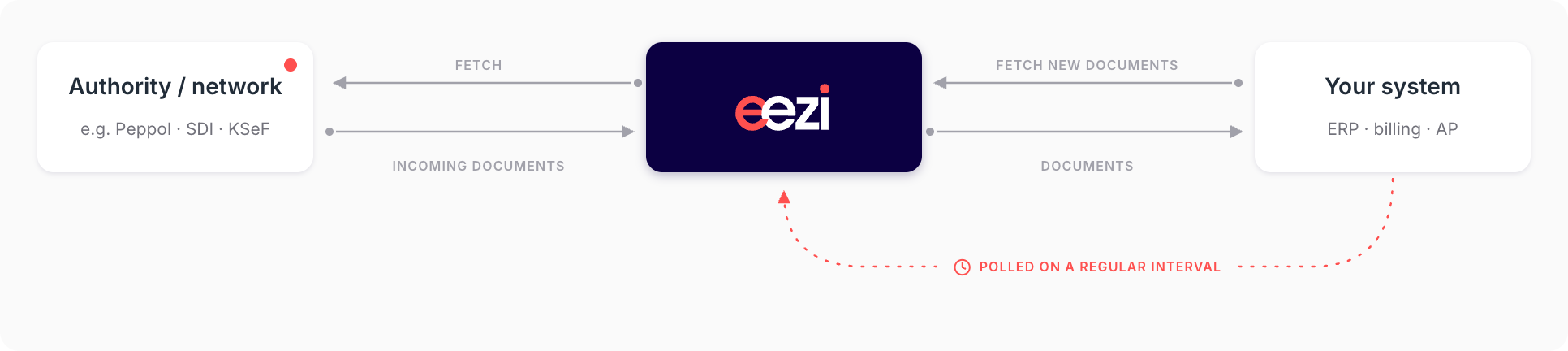
eezi collects invoices and credit notes addressed to you from networks and authorities, and delivers them wherever you work; Either, pushed via connector, sent by email, or pulled from the eezi API on your own schedule.
Deliver via connector
eezi fetches incoming documents on your behalf and pushes them straight into your systems via connectors.

Deliver by email
eezi fetches incoming documents and emails them to your inbox, with the PDF and original file attached.

Scheduled fetch from eezi
Your system calls the eezi API on a regular interval and pulls the incoming documents that have arrived since the last fetch.
All flows apply to invoices and credit notes alike — the same API, data model and dashboard.
Updated about 1 month ago